

Teeth are precious organs, and the principle of dental treatment has always been “to preserve natural teeth as much as possible”.
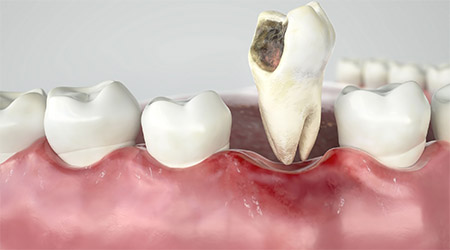
But when your dentist tells you that your tooth decay is too severe, the extent of the cavity is too large, the crown (the part of the tooth above the gum) is mostly damaged, only the root and the remaining part of the crown are left, and the decay has spread below the gum and cannot be saved by doing a post and crown restoration, it means that this decayed tooth has to be extracted.
Sometimes, your dentist may inform you that your periodontitis is severe, with the periodontal tissues (including the gums and alveolar bone) being severely damaged. The teeth are no longer adequately supported and have lost their masticatory function. There are a large number of bacteria in the periodontal pockets, which can become a focus of systemic infection. In such cases, your dentist may also recommend extracting the tooth.
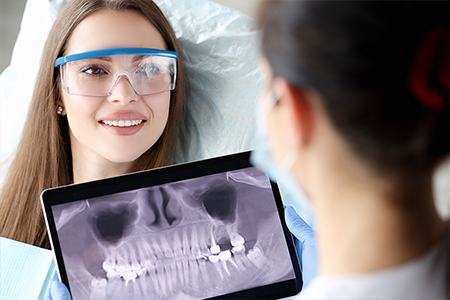
Whether a tooth needs to be extracted or not must be determined by a professional dentist through a comprehensive assessment involving clinical examination and X-rays. Of course, if you have doubts about the recommendation for tooth extraction, you can always take your X-rays to another dentist for a second opinion.
Please remember that tooth extraction itself is also a form of treatment. Pulling out a tooth that has no value to be retained and is even harmful is to protect the health of the entire mouth and the body.
It is very important to have a tooth restored in a timely manner after it is extracted. If a missing tooth is not replaced for a long time, it can lead to a series of problems such as disorder of the occlusion relationship, tilting of adjacent teeth, and atrophy of the alveolar bone.
At present, there are mainly three mainstream methods for dental restoration, each with its own advantages and disadvantages, and suitable for different situations.
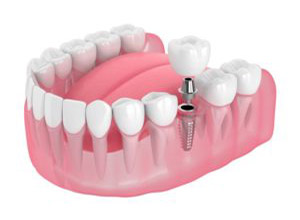
Dental implants
(An artificial tooth root made of pure titanium is implanted into the alveolar bone in the area of the missing tooth. After it has been firmly integrated with the bone tissue (about 3 to 6 months), a dental crown is installed on top of it.)
Suitable for single, multiple, or full-mouth tooth loss, especially for patients who have high requirements for restoration effect and long-term value.
Advantages:
1. Strong independence: No damage to adjacent teeth.
2. Excellent function: Chewing efficiency is closest to that of natural teeth.
3. Aesthetically pleasing and comfortable: No foreign body sensation, and the appearance is very realistic.
4. Protects the alveolar bone: Prevents bone resorption.
5. Long service life: With proper maintenance, it can last for decades or even a lifetime.
Disadvantages:
1. The highest cost.
2. Long treatment period (usually 3 to 6 months).
3. Requires a minor surgery and has certain requirements for the patient’s overall health and alveolar bone conditions.
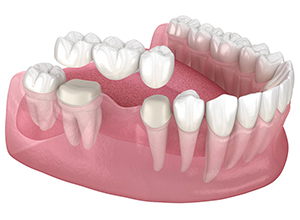
Fixed bridge
(Healthy teeth on both sides of the missing tooth are ground down a little to serve as “pillars”, and then a connected dental crown (like a bridge) is made and placed over the ground-down adjacent teeth to support the false tooth in the middle.)
It is suitable for cases where the number of missing teeth is small and the adjacent teeth are healthy (or have a large amount of filling and need to be crowned).
Advantages:
1. Good chewing function.
2. Good appearance.
3. Short treatment time (about 2 weeks).
4. Moderate cost.
Disadvantages:
1. Healthy adjacent teeth need to be ground down (this is irreversible damage).
2. High requirements for the health of adjacent teeth.
3. Cannot prevent alveolar bone atrophy.
4. Food can easily get stuck under the bridge, and improper cleaning may cause tooth decay or periodontal disease.
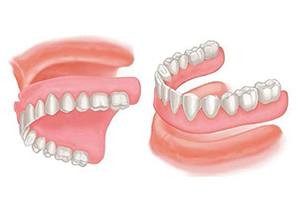
Removable dentures
(Connected by a base plate and held in place by clasps on adjacent healthy teeth to restore the shape and some functions of missing teeth)
Suitable for patients with multiple or full mouth tooth loss, limited budget, or those who cannot undergo implant or fixed restoration.
Advantages:
1. The cheapest option.
2. Simple to make and short production cycle.
3. No surgery required and no teeth grinding.
4. Easy to clean.
Disadvantages:
1. Strong foreign body sensation and poor comfort.
2. Low chewing efficiency.
3. Poor stability and may affect pronunciation.
4. Long-term use may accelerate alveolar bone resorption.
5. Need to be removed daily for cleaning.
Ultimately, which plan to choose, it is essential to visit a regular dental institution, where a doctor will conduct a comprehensive oral examination (including taking X-rays or CT scans), and then, based on your specific oral condition, economic situation and personal needs, make a decision through mutual discussion.